
The Latest on the U.S. Diesel Export Ban:
What It Means for Freight and Logistics
As of October 7, 2026 | 8 min Read

By Ivan Gonzalez
Diesel has become one of the most important variables facing the U.S. transportation and logistics industry in 2026.
Record fuel prices, tight inventories, geopolitical disruptions and uncertainty surrounding U.S. energy policy have created an unusually volatile environment for trucking companies, manufacturers, distributors and third-party logistics providers.
Over the past several weeks, Washington has debated everything from restricting U.S. diesel exports to releasing emergency fuel reserves and temporarily changing federal diesel-tax rules.
For businesses that depend on trucking, warehousing and distribution, the question is no longer simply where diesel prices go next. The bigger issue is how prolonged fuel volatility could affect transportation costs, inventory strategy and the broader supply chain.
What Happened With the Proposed U.S. Diesel Export Ban?
The possibility of restricting U.S. diesel exports emerged as policymakers looked for ways to increase domestic fuel supply and reduce record prices.
On September 23, the White House denied reports that the administration was preparing a 90-day diesel export ban. Energy Secretary Chris Wright said a blanket restriction could have unintended consequences, including putting upward pressure on gasoline and jet-fuel prices. At the time, officials said voluntary measures and other ways of increasing domestic diesel availability were being considered instead.
However, the issue did not disappear.
On September 30, President Donald Trump said publicly that his administration was still considering a diesel export restriction, acknowledging that such a move could lower diesel prices while potentially increasing prices for other refined fuels.
The rapid changes illustrate how fluid the current energy-policy environment has become.
Where the Diesel Export Issue Stands Now
Rather than immediately restricting U.S. exports, policymakers have recently turned toward coordinated international supply measures.
On October 2, G7 countries agreed to release approximately 100 million barrels of diesel and crude oil from emergency reserves while also pledging to avoid energy export restrictions. The move was intended to increase available supply and reduce pressure on global fuel prices.
On October 7, the International Energy Agency said it would accelerate the release of emergency petroleum reserves, with diesel receiving particular attention because of tight global supplies. Approximately 100 million barrels from previously authorized emergency releases remained available to enter the market.
The immediate risk of a full U.S. diesel export ban therefore appears lower than it did in late September—but the administration has not completely removed the idea from consideration.
Diesel Prices Remain Historically High
The policy debate is being driven by extraordinary fuel-market conditions.
The national average price of diesel reached approximately $6.53 per gallon on September 21, the highest level in the EIA's weekly series.
Earlier in September, diesel refining margins also reached exceptional levels. Reuters reported that the diesel crack spread—the difference between the value of diesel and the crude oil used to produce it—reached more than $100 per barrel, reflecting severe tightness in global refining capacity.
For freight-intensive businesses, the impact can appear quickly through:
- higher carrier fuel surcharges
- increasing truckload and LTL transportation costs
- greater volatility in spot freight pricing
- higher agricultural and manufacturing costs
- increased pressure on final delivered product prices
Diesel is not simply a trucking expense. It is embedded throughout the physical supply chain.

U.S. Diesel Inventories Are Still Tight
The underlying supply situation also remains challenging.
EIA data showed U.S. distillate inventories—including diesel and heating oil—at approximately 105.1 million barrels for the week ending October 2.
The EIA has forecast that U.S. distillate inventories will remain below their recent five-year range through the end of 2026 and for much of 2027. The agency attributes much of the tightness to reduced international refinery production and strong global demand for U.S. distillate exports. U.S. Energy Information Administration
U.S. refiners have responded with strong production. Earlier this summer, distillate output reached approximately 5.3 million barrels per day, while four-week domestic demand was about 3.7 million barrels per day. U.S. Energy Information Administration
That production surplus helps make the United States an important supplier to international markets—which is one reason an export restriction could have consequences well beyond U.S. borders.
Why U.S. Diesel Exports Matter
The United States is one of the world's major exporters of refined transportation fuels.
Distillate fuel oil—primarily diesel—represents more than half of U.S. transportation-fuel exports. Mexico has historically been the largest destination, while significant volumes also move to Latin America and Europe. U.S. Energy Information Administration
Restricting those exports could increase the amount of diesel available domestically in the short term.
But the tradeoff is complicated.
An export ban could disrupt international customers, alter refinery economics and potentially encourage refiners to change their production mix. Policymakers have also warned that reducing diesel exports could inadvertently contribute to higher prices for gasoline or jet fuel.
That explains why Washington has so far pursued more targeted measures rather than an outright prohibition.
The Federal Government Has Shifted Toward Temporary Diesel Relief
On October 5, the White House issued an executive order designed to provide temporary diesel-cost relief.
The order directs the Treasury Department to consider deferring certain federal diesel excise-tax obligations and temporarily removes federal penalties associated with using dyed diesel on highways through December 31, 2026, where legally authorized. It also directs federal agencies to work with states, fuel distributors, trucking organizations and agricultural groups on implementation.
The federal diesel excise tax is currently 24.4 cents per gallon, meaning the policy could provide some temporary relief for qualifying users.
Whether that measure materially lowers overall freight costs will ultimately depend on fuel availability, state-level participation and broader market conditions.
What This Means for Trucking and Logistics Companies
For transportation and logistics operators, the larger issue is uncertainty.
Diesel prices affect virtually every movement of physical freight. When fuel costs rise quickly, carriers generally adjust fuel surcharges to protect operating margins.
Those increases eventually move through the supply chain.
Manufacturers may pay more to bring raw materials into production facilities. Distributors may face higher replenishment costs. Retailers may experience higher outbound transportation expenses. Warehouses may see customers alter shipment frequency, consolidate orders or hold more inventory closer to end markets.
For logistics managers, diesel volatility therefore becomes an inventory and network-planning issue, not merely a transportation issue.
Warehousing Can Become More Important During Fuel Volatility
High transportation costs can change the economics of where companies hold inventory.
Businesses may choose to consolidate inbound loads, increase regional inventory, reduce unnecessary transfers or position products closer to major customer markets.
That can increase demand for:
Regional warehouse capacity. Businesses may store more inventory closer to customers instead of relying on frequent long-distance replenishment.
Overflow warehousing. Companies may temporarily increase inventory positions to reduce exposure to transportation disruptions.
Rail-served warehousing. Rail can become increasingly attractive for certain commodities and high-volume freight when long-haul truck transportation costs rise.
Transloading. Moving products efficiently between rail, truck and warehouse storage can provide additional transportation flexibility.
Inventory management. Higher carrying costs and transportation expenses make accurate inventory visibility even more important.
These are areas where a flexible 3PL can help businesses adjust without adding permanent facilities or fixed overhead.

What Businesses Should Be Planning For
The current environment calls for scenario planning rather than trying to predict one fuel-price outcome.
Logistics managers should consider three basic scenarios:
Diesel prices gradually decline. Emergency reserve releases, improving refinery operations and additional global supply could reduce pressure.
Prices remain elevated. Global refinery constraints and geopolitical disruptions could keep diesel well above historical averages.
Another supply shock occurs. Further refinery outages, geopolitical escalation, weather disruptions or renewed export restrictions could quickly tighten the market again.
Businesses should understand how each scenario affects freight budgets, carrier contracts, inventory positioning and customer service requirements.
Flexibility Matters in an Uncertain Freight Market
The diesel market is a useful reminder that supply chains rarely operate under perfectly predictable conditions.
Fuel prices, transportation capacity, geopolitical events and government policy can all change quickly.
Companies with flexible warehousing and distribution networks are generally better positioned to adapt when those conditions shift.
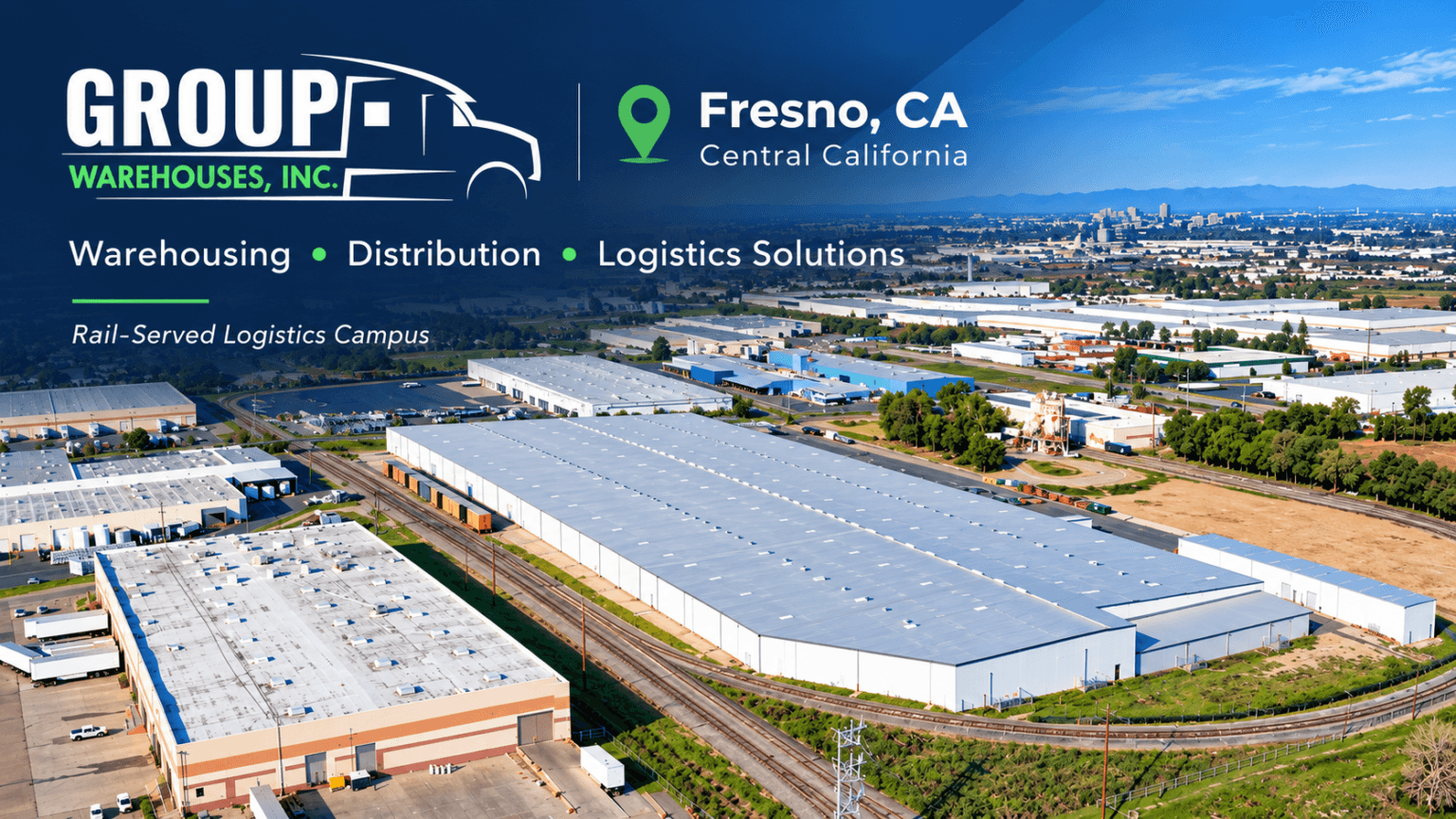
At Group Warehouse in Fresno, California, we support businesses with flexible warehousing, inventory management, rail-served storage, transloading, overflow capacity and customized distribution programs designed around changing operational requirements.
Our Central California location allows customers to position inventory strategically while serving markets throughout California and beyond.
Looking for warehousing in Fresno or Central California?
or
to discuss your storage, handling, and distribution requirements.




Request Pricing and Warehouse Availability
Tell us what you store, how much space you need and where your products need to go. Our logistics team will review your requirements and recommend an appropriate warehousing and distribution solution.
Looking for warehousing in Fresno or Central California?
Planning for Changing Freight or Inventory Requirements?
If diesel costs or transportation uncertainty are changing how you manage inventory, we can help evaluate warehousing and distribution options.
"We Don't Say No We Say Service."
Copyright © 2026 | 3550 S Willow Ave, Fresno, California 93725, US | Made in USA