
Amazon FBA vs. FBM: How a 3PL Can Help Ecommerce Sellers Scale
Fulfillment by Amazon (FBA) and Fulfilled by Merchant (FBM)
November 10, 2026 | 12 min Read

By Matthew Goosev, eCommerce Expert
Selling on Amazon gives eCommerce businesses access to one of the largest online marketplaces in the world, but making the sale is only part of the equation.
Every order still needs inventory behind it. Products have to be received, stored, tracked, picked, packed, shipped, replenished, and sometimes returned.
For Amazon sellers, one of the most important operational decisions is deciding who will fulfill those orders.
Amazon sellers can use Fulfillment by Amazon (FBA), Fulfilled by Merchant (FBM), or a combination of both. A third-party logistics provider can add another layer of flexibility by handling the physical warehousing and distribution work behind an FBM or hybrid fulfillment strategy.
For businesses looking to scale without operating their own warehouse, understanding how FBA, FBM, and 3PL warehousing work together can be an important part of building a more flexible eCommerce supply chain.
What Is Fulfillment by Amazon?
Fulfillment by Amazon, or FBA, allows sellers to send products into Amazon's fulfillment network.
Amazon stores the inventory and handles picking, packing, shipping, customer service, and returns for orders enrolled in FBA. Eligible products can also receive Prime delivery benefits. Learn more about Amazon FBA
For many ecommerce sellers, that creates a convenient fulfillment model.
Instead of operating a warehouse and processing individual consumer orders, the seller replenishes Amazon's fulfillment network and lets Amazon manage the direct-to-consumer fulfillment process.
However, the seller still has to decide how much inventory to place into FBA and when to replenish it.
Amazon notes that FBA costs can include fulfillment and storage charges, with costs varying based on factors such as product size, weight, and the services being used.
That means FBA can be an excellent fit for some inventory while other products may benefit from a different strategy.
What Is Amazon FBM?
Fulfilled by Merchant, or FBM, gives the seller responsibility for fulfilling customer orders rather than routing those orders through Amazon's FBA network.
Amazon's FBM program allows sellers to manage their own inventory, shipping settings, delivery promises, orders, and fulfillment processes. Sellers can use FBM across their entire catalog or combine it with FBA. Explore Amazon Fulfilled by Merchant
Importantly, "fulfilled by merchant" does not necessarily mean the seller has to physically operate its own warehouse.
The seller can maintain an FBM strategy while outsourcing the physical storage, picking, packing, and distribution work to a third-party logistics provider.
That is where a 3PL can become valuable.
Where a 3PL Fits Into Amazon FBM
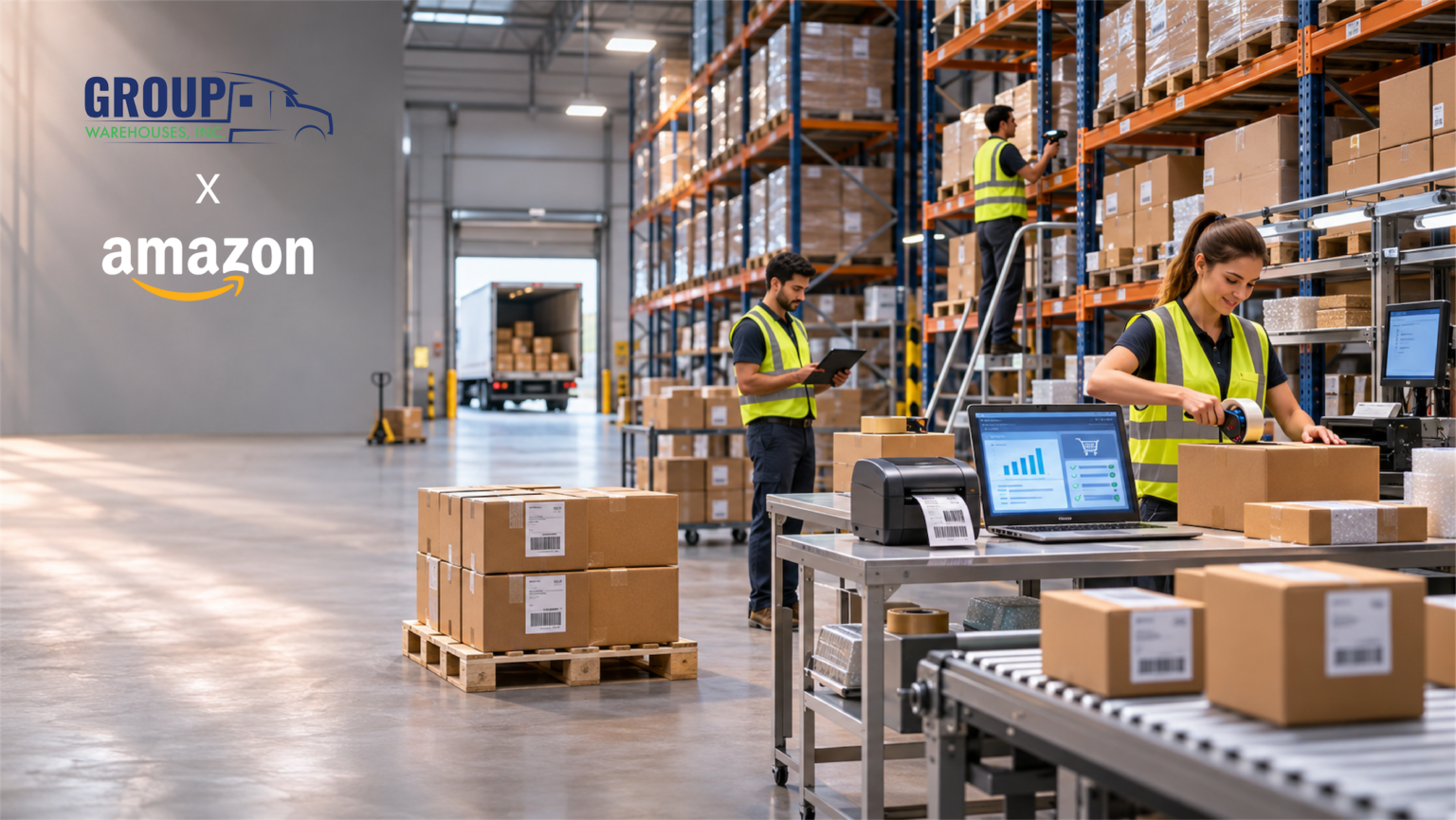
A third-party logistics provider, or 3PL, can handle warehouse and fulfillment functions on behalf of an eCommerce seller.
Amazon itself identifies third-party fulfillment as an option for businesses that want to outsource logistics. Amazon notes that 3PL providers can help eCommerce businesses scale by supporting areas such as inventory management, logistics, and returns. Amazon's guide to ecommerce fulfillment
A typical FBM and 3PL workflow could look like:
Customer places an Amazon order → Order information reaches the fulfillment operation → The 3PL picks and prepares the order → The shipment leaves the warehouse → Tracking and inventory information are updated.
The seller remains responsible for complying with Amazon's applicable seller-fulfilled requirements, while the physical warehouse activity can be performed by the logistics provider.
For growing eCommerce businesses, that can eliminate the need to build an entire warehouse operation internally.
Benefit #1: Avoid Operating Your Own Warehouse
Running a warehouse requires much more than renting space.
Businesses may need:
- warehouse labor
- forklifts and equipment
- pallet racking
- inventory systems
- receiving procedures
- packaging stations
- carrier relationships
- warehouse management
- utilities and insurance
- additional capacity during seasonal peaks
A 3PL allows the eCommerce company to outsource much of that infrastructure.
Amazon describes 3PL services as a way for eCommerce businesses to scale while outsourcing functions such as warehouse storage, shipping coordination, order fulfillment, and retail distribution. Read Amazon's 3PL overview
For sellers that would rather focus on product development, sales, marketing, and customer acquisition, that can be a meaningful advantage.
Benefit #2: Maintain Greater Control Over Inventory
With an FBM strategy, businesses have more flexibility over where inventory is physically stored.
That can be especially useful for sellers operating across multiple sales channels.
For example, inventory held in a 3PL warehouse could potentially support:
- Amazon FBM orders
- Amazon FBA replenishment
- wholesale customers
- retail distribution
- B2B orders
- the seller's own eCommerce website
- other online marketplaces
Rather than committing every unit of inventory to one fulfillment channel, the seller can use a centralized warehouse strategy.
At Group Warehouse, our Fresno 3PL operation supports flexible warehousing, inventory management, B2B fulfillment, pallet and case picking, and customized distribution programs. Explore Group Warehouse 3PL services
Benefit #3: Support Products That May Not Fit FBA Well
Amazon specifically identifies FBM as an option for products sellers prefer to fulfill outside FBA, including certain heavy or bulky items, slower-moving inventory, and temperature-sensitive products.
That can create a strong use case for specialized 3PL warehousing.
Some products may require:
- pallet storage
- oversized handling
- lot tracking
- batch tracking
- FIFO or FEFO rotation
- special labeling
- repacking
- temperature-controlled storage
- customized warehouse procedures
These types of operational requirements may benefit from a warehousing program designed specifically around the inventory.
Group Warehouse provides customized warehouse programs from Fresno, California, including inventory management, temperature-controlled storage, B2B fulfillment, transloading, and value-added services. View Group Warehouse capabilities
Benefit #4: Support Both Ecommerce and B2B Distribution
Many businesses do not remain purely direct-to-consumer.
An eCommerce brand may eventually begin selling to:
- retailers
- distributors
- wholesale customers
- commercial accounts
- regional chains
- additional online marketplaces
That changes the fulfillment profile.
Instead of only shipping individual parcels, the business may also begin shipping cases, mixed orders, and full pallets.
A 3PL that supports both eCommerce and traditional distribution can allow inventory to serve multiple customer channels from one warehouse.
Group Warehouse supports pallet and case picking, retail replenishment, labeling, repacking, and customized B2B distribution from its Fresno facility.
FBA vs. FBM: It Doesn't Have to Be One or the Other
One of the most important points for Amazon sellers is that FBA and FBM do not have to be mutually exclusive.
Amazon specifically allows sellers to use FBM for some products while using FBA for others.
That creates the possibility of a hybrid fulfillment model.
For example:
Fast-moving Amazon inventory
May be positioned inside FBA.
Bulk reserve inventory
Can remain in a 3PL warehouse.
Slower-moving products
Can potentially remain within an FBM strategy.
Retail and B2B inventory
Can ship from the same 3PL warehouse.
FBA replenishment inventory
Can be staged at the 3PL and moved into Amazon's network as needed.
This can give sellers greater flexibility when balancing storage costs, inventory availability, product velocity, and fulfillment requirements.
A 3PL Can Also Support FBA Sellers
A 3PL relationship is not only useful for FBM.
Even when a business uses Amazon FBA, inventory still has to reach Amazon's fulfillment network.
Manufacturers or importers may produce or purchase significantly more inventory than they want to place into FBA at one time.
Instead, products can move first into a third-party warehouse.
The 3PL can potentially support:
- receiving bulk shipments
- pallet storage
- inventory control
- labeling
- repacking
- shipment preparation
- staging
- FBA replenishment shipments
The warehouse effectively becomes an inventory buffer between the manufacturer and Amazon's fulfillment network.
That can give the seller greater control over how quickly reserve inventory is moved into FBA.
FBA Storage vs. 3PL Storage
Inventory storage should be evaluated as part of the complete fulfillment strategy.
Amazon's FBA model includes storage and fulfillment charges, and those costs depend on the product and services being used.
That does not automatically mean a 3PL is less expensive.
Every program has different economics.
Instead, businesses should compare the overall cost and operational impact of:
- FBA storage
- 3PL warehouse storage
- inbound freight
- replenishment costs
- order volume
- inventory velocity
- product dimensions
- handling requirements
- fulfillment costs
- seasonal inventory
- returns
- multi-channel inventory needs
For some businesses, storing reserve inventory outside FBA and replenishing Amazon strategically may provide more flexibility than sending all available inventory into one network at once.
When Amazon FBM With a 3PL May Make Sense
An FBM and 3PL strategy may be worth evaluating if your business:
- carries substantial reserve inventory
- sells through more than one channel
- handles both ecommerce and B2B orders
- has slower-moving SKUs
- sells heavy or bulky items
- needs pallet and case storage
- requires special labeling or handling
- wants greater inventory control
- does not want to operate a warehouse
- needs seasonal or overflow capacity
Amazon also offers sellers tools such as shipping automation, Multi-Location Inventory, Amazon Buy Shipping, and Veeqo to support seller-fulfilled operations. See Amazon FBM tools
Amazon FBM Still Requires Strong Execution
Using a 3PL does not eliminate the seller's responsibility to maintain a strong Amazon operation.
Amazon's FBM program requires sellers to manage fulfillment performance, shipping commitments, cancellations, tracking, returns, and account health.
That makes warehouse execution extremely important.
A seller-fulfilled operation depends on:
- accurate inventory
- reliable order processing
- clear cutoff times
- timely shipment confirmation
- proper packaging
- dependable carrier handoff
- accurate tracking
- organized returns procedures
A 3PL supporting eCommerce sellers should understand that FBM fulfillment is not simply warehouse storage.
It is a time-sensitive fulfillment operation connected directly to marketplace performance.
How a Central California 3PL Can Support Ecommerce Distribution
Warehouse location also matters.
A Central California distribution point can provide a strategic location between Northern and Southern California markets.
From Fresno, businesses can position inventory to support customers throughout California while also connecting into regional and nationwide distribution networks.
Group Warehouse's Fresno location supports manufacturers, distributors, importers, and growing businesses with flexible warehousing and distribution programs.
For an Amazon or ecommerce seller, that warehouse could potentially serve as a central hub for:
- bulk inventory storage
- Amazon FBA replenishment
- Amazon FBM fulfillment
- B2B distribution
- retail replenishment
- overflow inventory
- other ecommerce channels
Rather than maintaining separate inventory pools for every sales channel, businesses can build a broader distribution strategy around centralized inventory.
Choosing the Right 3PL
Not every 3PL is a good fit for every eCommerce operation.
Businesses should evaluate factors such as:
- warehouse location
- inventory systems
- product compatibility
- order volume
- pallet and case capabilities
- reporting
- handling procedures
- outbound transportation
- customer service
- responsiveness
- scalability
The strongest 3PL relationships are typically built around the specific way a business operates rather than forcing every customer into the same warehouse program.
You can read more about that approach in Why Companies Choose Group Warehouse.
You can also explore additional warehousing, transportation, inventory, and supply-chain topics in our Logistics Insights resource center.
Group Warehouse and Ecommerce Fulfillment
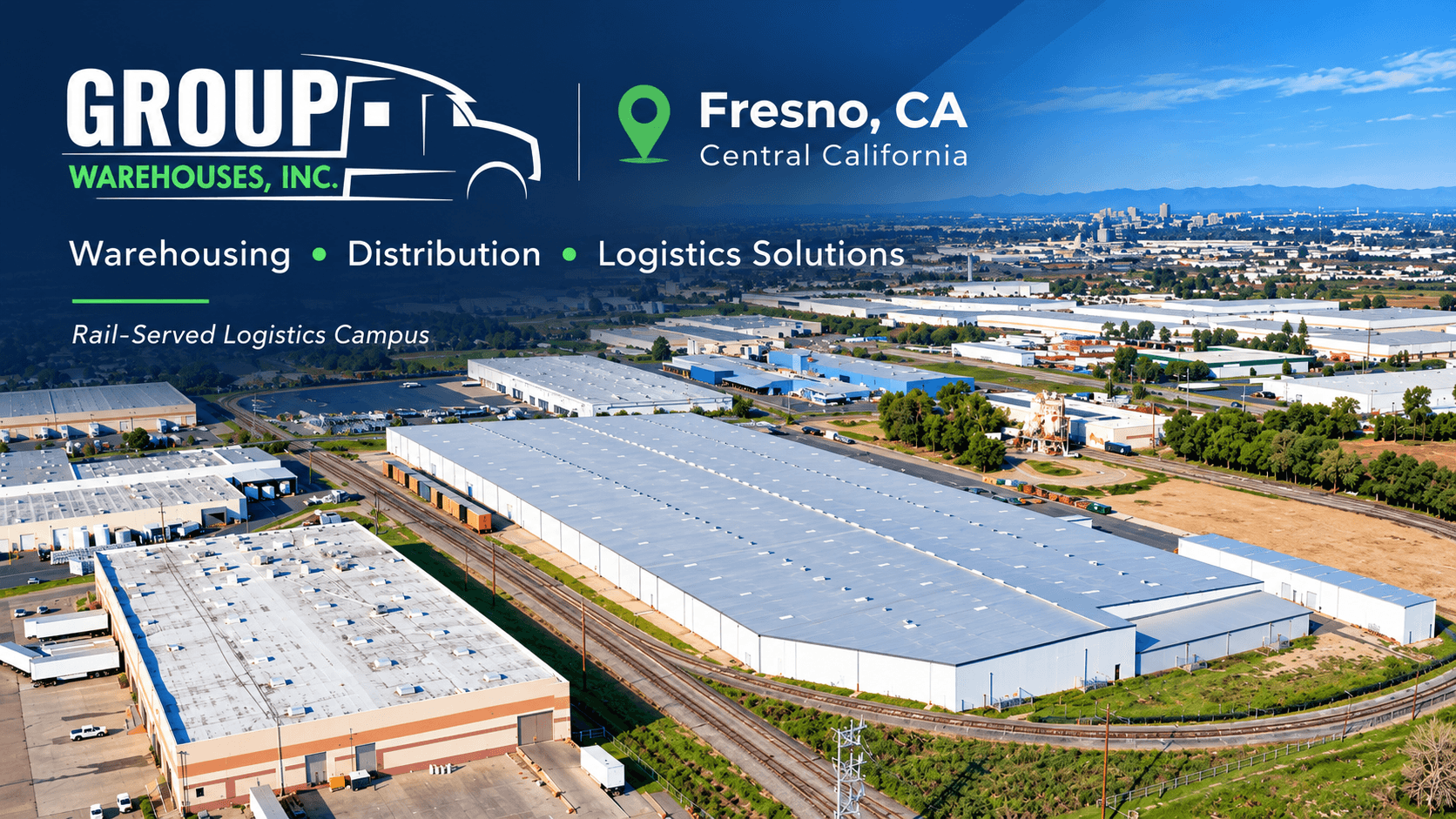
Group Warehouse is a Fresno-based 3PL providing warehousing, inventory management, fulfillment, and distribution services for businesses operating throughout California and beyond.
For eCommerce and Amazon sellers, programs can be structured around the specific inventory and distribution requirements of the business.
Capabilities include:
- pallet storage
- receiving
- inventory management
- pallet and case picking
- labeling
- repacking
- B2B fulfillment
- outbound distribution
- customized warehouse projects
For companies using Amazon FBA, a 3PL can provide bulk inventory storage and support replenishment into Amazon's network.
For businesses using Amazon FBM, a 3PL can provide the physical warehouse infrastructure needed to store inventory and process outbound orders without requiring the seller to operate its own warehouse.
And for businesses using both strategies, the warehouse can become a central inventory hub supporting multiple fulfillment channels.
Explore Group Warehouse warehousing and distribution services
Build the Fulfillment Strategy Around Your Business
Amazon FBA offers convenience and access to Amazon's fulfillment network.
Amazon FBM gives sellers more control over their fulfillment operation.
A 3PL can add another layer of flexibility by providing professional warehouse infrastructure without requiring the seller to build and operate that infrastructure internally.
For many growing eCommerce businesses, the best solution may not be choosing between FBA, FBM, or a 3PL.
It may be determining how all three can work together.
Looking for warehousing in Fresno or Central California?
or
to discuss your storage, handling, and distribution requirements.


Request Pricing and Warehouse Availability
Tell us what you store, how much space you need and where your products need to go. Our logistics team will review your requirements and recommend an appropriate warehousing and distribution solution.
Looking for warehousing in Fresno or Central California?

Need Warehouse Support for Your Ecommerce Operation?
If you're selling through Amazon, expanding into FBM, replenishing FBA inventory, or managing ecommerce and B2B inventory from the same supply chain, Group Warehouse can help evaluate a warehousing and distribution program around your requirements.
"We Don't Say No We Say Service."
Copyright © 2026 Group Warehouses, Inc. | 3550 S Willow Ave, Fresno, California 93725, US | Made in USA